
THIS CIRCULAR LESION CAN LOOK UNSETTLING, BUT IT IS HIGHLY TREATABLE WITH THE RIGHT CARE.
Tinea capitis is a contagious fungal infection of the scalp, most recognisable by its circular, ring-like patches, which give rise to its more common name, ringworm.
Despite its appearance, it is a treatable condition that affects both the scalp and hair. In this guide, we look at how it presents, how to recognise it early, and how to treat it effectively.
The key Signs and Symptoms
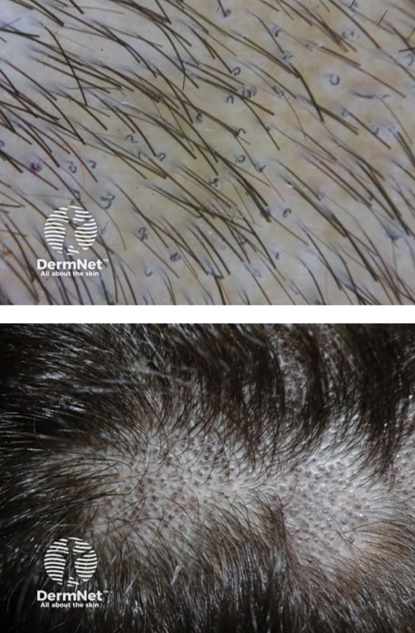
It can present as well-defined, circular patches of inflamed skin, with an outer edge that is often red, itchy and slightly raised, while the centre may begin to settle or heal. Affected areas may also develop grey scaling, crusting and pustules. Although some patches have a ring-like appearance, this is not always present. On darker skin, redness may be less visible, making inflammation harder to recognise.
Hair loss is a common feature, usually appearing in patches. Affected hairs become weak and brittle, breaking close to the scalp and leaving short, stubble-like fragments. In some cases, infected hairs appear greyish-white because fungal spores coat the hair shaft.
The condition often affects isolated areas of the scalp, although scaling can sometimes be more widespread. It may extend slightly beyond the hairline to the nape of the neck or behind the ears. Fungal infection can also involve the eyebrows, eyelashes and other areas of the body.
In most cases, hair loss is temporary and regrowth is expected with appropriate treatment. However, severe inflammation can sometimes cause scarring and permanent hair loss.
Contributing Factors
Tinea capitis is caused by dermatophytes, a group of fungi that feed on keratin, the protein found in hair, skin, and nails. Once established on the scalp, these fungi spread into the hair and surrounding skin.
This highly contagious condition thrives in warm, humid environments. It spreads easily through close contact and shared items such as brushes, hats, bedding, or towels, and can also pass between humans and animals, particularly household pets.
Anyone can develop tinea capitis, but it is more likely to occur where transmission or exposure is repeated. Individuals with a weakened immune system may also be more susceptible to infection.
Treatment of Tinea Capitis
Tinea capitis is highly contagious and requires prescription oral antifungal medication, so seek advice from a GP or dermatologist. Topical products alone cannot clear the infection. A trichologist can provide additional support with persistent scalp irritation or hair loss alongside medical treatment.
Oral antifungal medication is usually prescribed as first-line treatment
Antifungal shampoos may be recommended alongside treatment to help reduce the spread
In some cases, additional topical treatments may also be used
Trimming the hair can help support treatment effectiveness
Preventing spread and reinfection
Tips to Stop the Spread
Begin treatment immediately and complete the prescribed course
Avoid physical contact with others to prevent the spread
Avoid sharing brushes or combs with others
Sterilise your hair tools (combs, brushes and clips) frequently
Wash items (towels/bedding/clothes) that come into contact with the scalp at a high heat
Wash your hands frequently and use hand sanitiser
Avoid touching or scratching the infected area, as this will only increase the risk of spreading the infection
Keep the scalp cool and let it breathe. Whilst you may want to contain the infected area by covering it up, unfortunately, this will only increase the risk of spreading the infection, as the fungus thrives in warm, humid environments
Tinea capitis is completely treatable. While it can be worrying, most cases respond well to treatment, and the scalp and hair are expected to fully recover over time.


© 2026 The Hair Consultancy