

COSMETIC TRAUMATIC HAIR LOSS DESCRIBES DAMAGE CAUSED BY CHEMICAL TREATMENTS, HEAT OR PHYSICAL TRAUMA. IDENTIFYING THE CAUSE EARLY CAN HELP PREVENT FURTHER BREAKAGE AND ALLOW HEALTHIER HAIR TO GROW.
Colour, heat and styling can transform our hair, but repeated or overly aggressive treatments can leave strands fragile. When hair begins to snap and lengths lose fullness, it can look like thinning, even when growth at the root continues.
What happens to the hair?
The outer cuticle protects the structures within each strand. Bleaching, perming, relaxing and excessive heat can damage this protective layer and weaken the hair’s internal structure, making it more likely to break.
Damage may follow a single unsuitable service or develop gradually through repeated processing. Applying chemicals over previously treated hair, combining incompatible services or regularly using high temperatures can increase that strain.
Most cosmetic damage affects the visible hair shaft. However, severe chemical or thermal burns can also injure the scalp and potentially damage follicles.
Recognising the signs
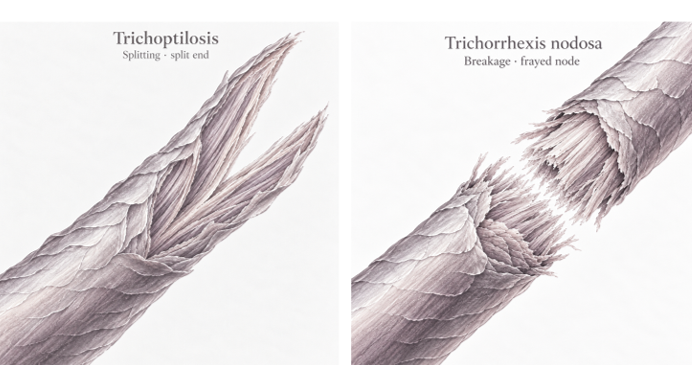
Hair may feel rough, tangle easily or appear dull, with split ends and uneven lengths. Short, broken strands can become noticeable throughout the hair, while the ends look increasingly sparse.
Breakage may be concentrated where treatments overlap or styling repeatedly stresses the same area. Burning, redness, tenderness or persistent itching suggest the scalp also needs attention.
A trichologist can examine your hair and scalp to distinguish breakage from shedding at the root. Significant inflammation, blistering or suspected scarring requires medical assessment.
Give fragile hair a gentler routine
Recovery begins with removing the source of damage and protecting the hair that remains.
Pause chemical treatments: Give fragile strands a break from bleaching, perming or relaxing, and review your treatment history with your hairdresser.
Reduce heat: Limit heated tools, choose lower temperatures and use a heat protectant when styling.
Condition regularly: Conditioner and suitable leave-in products improve manageability and reduce friction, helping limit further breakage.
Handle gently: Detangle in sections, working from the ends upwards with a method suited to your texture.
Trim damaged ends: Removing split ends helps prevent further splitting and supports length retention.
Hair fibres cannot heal biologically, although treatments can improve their condition and reduce further damage. Lasting improvement comes as new growth replaces damaged lengths. Where follicles remain healthy, growth should continue, giving you a reassuring foundation to rebuild fullness over time.


© 2026 The Hair Consultancy