
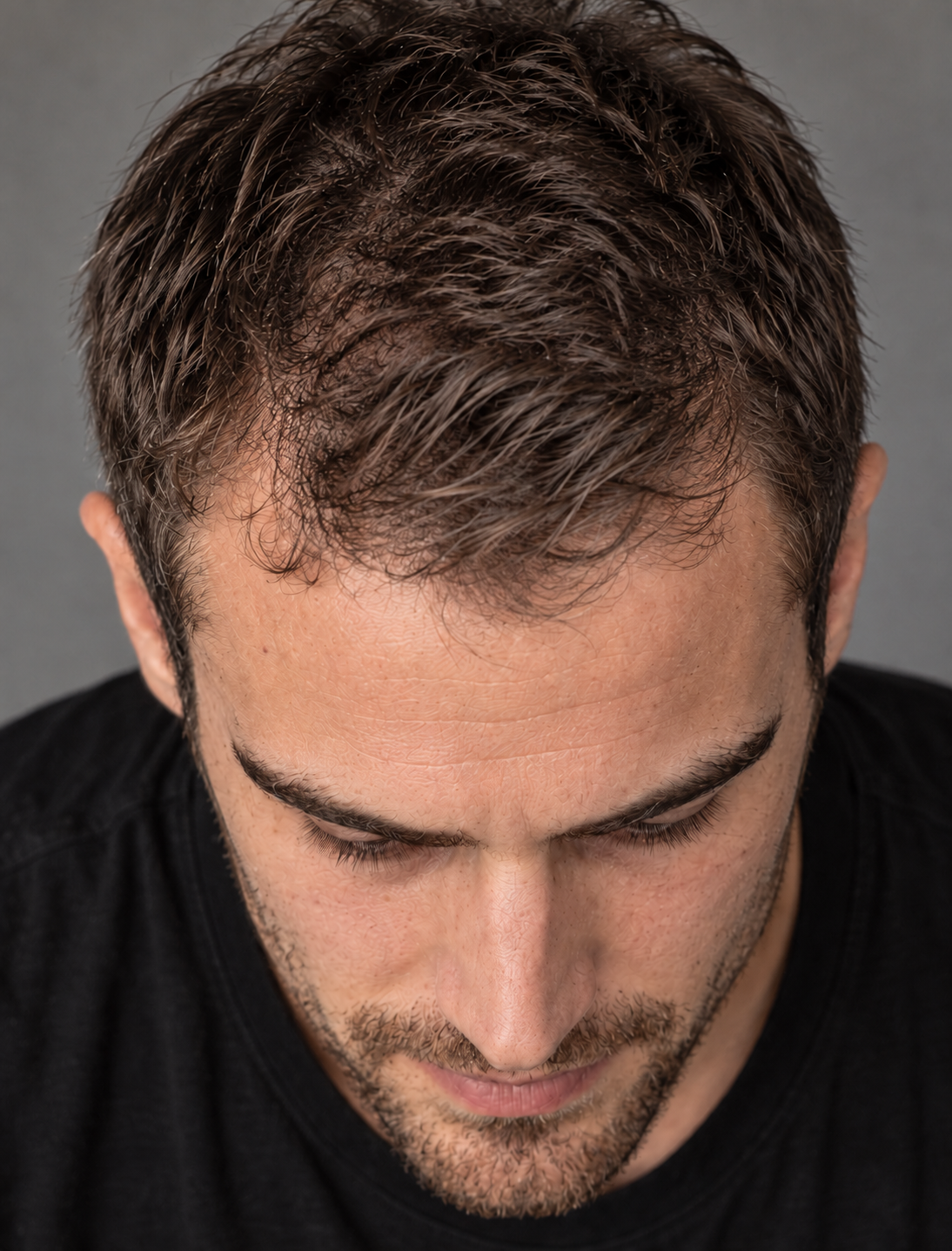
MALE PATTERN HAIR LOSS IS THE MOST COMMON FORM OF HAIR LOSS IN MEN AND OFTEN BEGINS WITH SUBTLE CHANGES. PROGRESSION VARIES, BUT UNDERSTANDING IT CAN MAKE NEXT STEPS FEEL MORE MANAGEABLE.
Why does it happen?
Male pattern hair loss develops through a combination of genetics, hormones and age. An inherited sensitivity to dihydrotestosterone (DHT), a hormone formed from testosterone, causes certain scalp follicles to become progressively smaller.
This process, known as miniaturisation, shortens the growing phase of the hair cycle. With each cycle, affected follicles produce finer, shorter strands, gradually reducing coverage. This does not necessarily mean you have unusually high testosterone; follicle sensitivity matters.
The same hormones that encourage beard and body hair can have the opposite effect on susceptible scalp follicles. This helps explain why a full beard and a thinning crown can occur together.
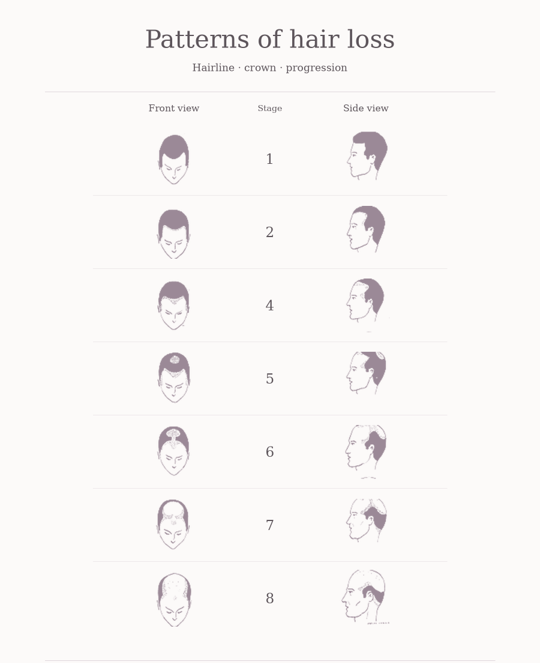
Recognising the pattern
Thinning usually begins at the temples, front hairline, or crown, while the back and sides remain comparatively dense. It can start any time after puberty and become more noticeable with age.
A trichologist can assess the pattern and discuss your options. Sudden shedding, distinct patches or an inflamed scalp warrant medical assessment, as these may indicate another condition.
What can treatment offer?
There are effective options to help slow hair loss, maintain existing hair and, in some cases, encourage regrowth. Starting early, while thinning is still mild, offers the best chance to preserve fullness.
Topical minoxidil, available over the counter, supports the hair’s growing phase and can improve density with consistent use. Potential side effects include scalp irritation and temporary initial shedding.
Prescription finasteride reduces DHT, helping to slow further thinning and encourage regrowth. Potential side effects include sexual dysfunction and changes in mental health, including depression and suicidal thoughts.
You may use these treatments individually or together, depending on your needs. Discuss suitability before starting and read the relevant product leaflets.
For those seeking further restoration, a hair transplant can redistribute healthy follicles to improve coverage. PRP and low-level light treatments may also support follicular health. A tailored approach can help you choose options that suit your hair, expectations and lifestyle.
Looking after the hair you have
Gentle haircare: Wash and condition regularly, handle wet hair gently, and avoid excessive heat or tight styles to reduce breakage.
Regular trims: A considered cut can make hair look fuller, while removing split ends helps maintain hair health.
Thickening products: Volumising mousses, root-lifting sprays and texturising powders add body to finer strands. Build gradually to avoid weighing hair down.
Cosmetic concealers: Hair fibres, coloured sprays and scalp concealers reduce the contrast between hair and scalp. Fibres work best where some existing hair remains.
Hairpieces: Human hair and synthetic options offer immediate coverage. Choose a comfortable fit and an attachment method that avoids excessive tension.
Scalp micropigmentation: Small dots of pigment tattooed onto the scalp can mimic closely shaved follicles or make thinning less visible. Choose an experienced practitioner and review their healed results.
Balanced nutrition: Varied, nourishing meals with enough protein, carbohydrates and fats support normal hair growth, although they cannot reverse inherited follicle changes.
Targeted supplements: Supplements can help correct an identified deficiency. If your nutritional needs are already met, taking more is unlikely to improve growth, and excess amounts of certain nutrients can be harmful.
Stress management: Significant stress can cause additional shedding alongside pattern hair loss. Regular movement, enjoyable activities and time to unwind can help support wellbeing.
Restful sleep: A consistent sleep schedule and a calming bedtime routine give your body regular opportunities to rest and recover.
Whether you choose treatment, cosmetic support or a shorter style, the approach should suit your priorities. Hair loss can affect confidence, and seeking support is as worthwhile as exploring regrowth.


© 2026 The Hair Consultancy