

A CLOSER LOOK AT HAIR FRAGILITY, BREAKAGE, AND BUILDING BACK HEALTHIER HAIR.
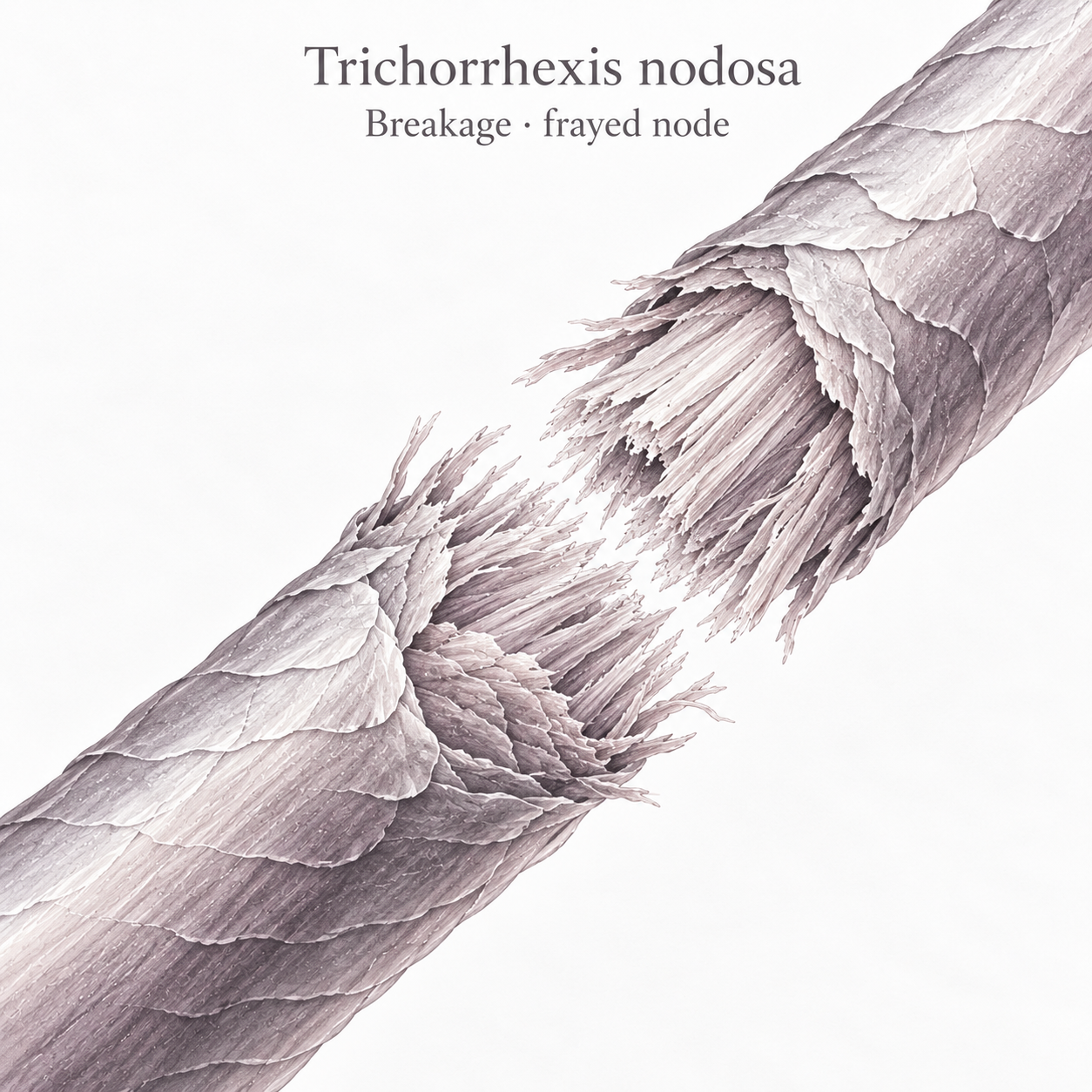
Healthy hair fibres are like strong cables: smooth, uniform and resilient. When they weaken, breaks can develop along the shaft, leaving hair frayed and uneven. One common cause is trichorrhexis nodosa, a hair-shaft condition often called hair breakage.
Though the name sounds clinical, it describes structural damage that can affect anyone. Understanding the cause can help you manage it and prevent further damage.
What is trichorrhexis nodosa?
Trichorrhexis nodosa occurs when the hair shaft develops weak points, or nodes, that may look like small white or translucent bumps. At these points, the hair’s fibres have frayed, making the strand more likely to split or snap.
Visual Signs:
Hair affected by Trichorrhexis Nodosa often appears:
Dull and uneven in texture
Frayed or brush-like at the ends
Prone to frequent snapping
Marked by white dots or nodes along the shaft (often mistaken for nits or buildup)
What Causes Trichorrhexis Nodosa?
This type of breakage most often results from physical or chemical trauma to the hair. While some people may be genetically predisposed to a more fragile hair structure, the most common causes include:
Excessive heat styling: Repeated use of straighteners, curling irons, or hot dryers, especially without protection, can degrade the protein bonds that keep the hair shaft intact.
Chemical treatments: Bleaching, relaxing, perming, and dyeing all compromise the hair’s structural integrity, leaving it more susceptible to nodular breakage.
Harsh shampoos and over-washing: Washing too often or using alkaline products can strip natural oils, leading to dryness and increased fragility.
Friction and tension: Rough towel drying, tight hairstyles, and sleeping on coarse fabrics like cotton can cause mechanical stress that encourages node formation.
Underlying conditions: In rare cases, Trichorrhexis Nodosa can be inherited or linked to metabolic or nutritional deficiencies, such as iron deficiency and hypothyroidism, though most cases develop through lifestyle factors.
Can You Repair It?
Trichorrhexis Nodosa cannot be reversed once the hair shaft is damaged. However, proper hair care can effectively manage it, prevent further damage, and support healthy new growth.
Can Hair Still Grow Normally?
Hair continues to grow from the scalp, but repeated breakage at weak points along the shaft makes it difficult to retain length. This is why people with trichorrhexis nodosa often feel their hair “just won’t grow”; new growth is offset by breakage along the length.
7 Tips to Prevent Trichorrhexis Nodosa
Trim regularly: Even if you're growing your hair, regular micro-trims are essential to remove weakened or broken sections and prevent splits from travelling upward.
Upgrade your cleansing and conditioning routine: Switch to a moisturising shampoo and pair it with a protein-rich conditioner treatment. Conditioning is key for locking in moisture and sealing the hair shaft's cuticle.
Avoid high heat: Minimise the use of flat irons and blow dryers. When styling, always use a heat protectant spray and keep temperatures as low as possible.
Switch to a microfiber towel: Ditch the rough cotton towels. Microfiber towels absorb moisture gently with minimal friction, helping prevent mechanical wear that leads to nodular damage.
Detangle gently: Use a wide-tooth comb or detangling brush on wet, conditioned hair. Start from the tips and work your way up, never forcing through knots.
Protect your hair while sleeping: Switch to a silk or satin pillowcase, or wear a silk bonnet at night to reduce friction and tangling as you sleep.
Nourish from the inside out: A diet rich in protein, iron, vitamin D, zinc, and B12 supports hair strength and reduces the likelihood of breakage. If you're unsure about deficiencies, a blood test may help pinpoint any underlying issues.
Trichorrhexis Nodosa may sound intimidating, but it’s more common and more manageable than you might think. By taking proactive steps to reduce damage, nourish your scalp, and handle your hair with care, you can protect your strands and support healthier growth.


© 2026 The Hair Consultancy